
Samsung Dishwasher LC Error Code: Why It Doesn’t Always Mean a Leak
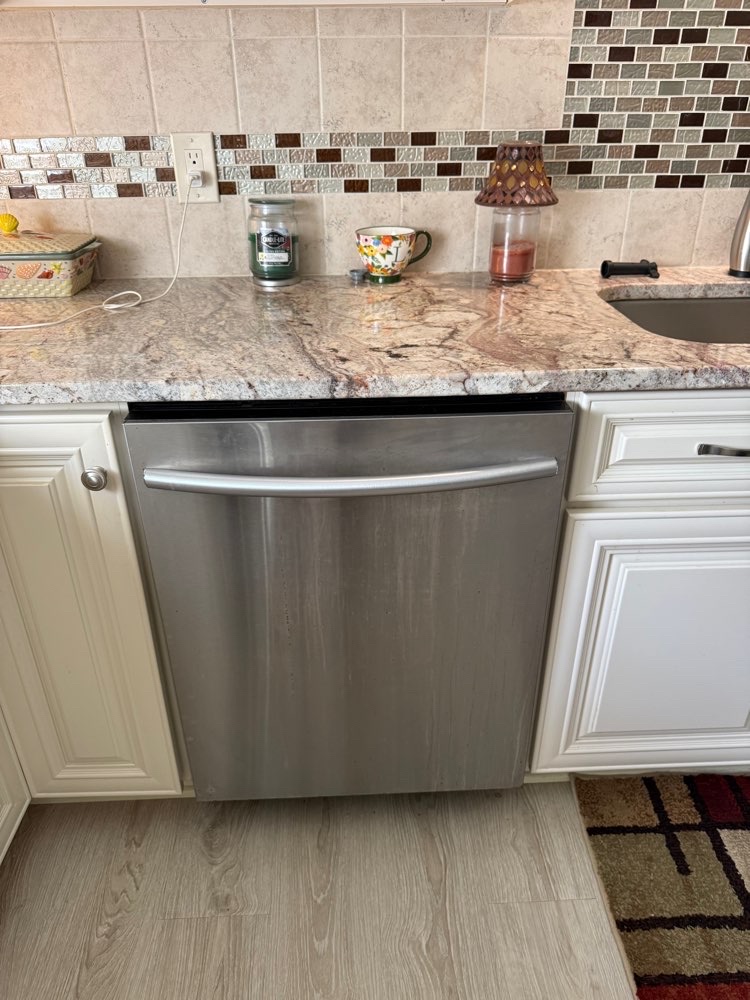
On a recent service call in Massillon, Ohio, we diagnosed a Samsung DW80K7050US dishwasher that had been throwing the LC error code, running in fits and starts, and shutting itself down mid-cycle. The homeowner had read online that LC means an active leak and that the answer was probably a new pump or, worst case, a new dishwasher. After about twenty minutes under the unit we knew the truth was different. There was no active leak. The water in the drip pan was static, residual, and likely months old. The leak sensor at the bottom of the cabinet had simply latched into a tripped state and was holding the dishwasher hostage every cycle. That’s the nuance most homeowners — and a surprising number of technicians — miss about Samsung’s LC code, and it’s worth understanding before you panic-replace a perfectly repairable dishwasher.
What does the LC code mean on a Samsung dishwasher?
On Samsung dishwashers, LC (sometimes shown as 1C on certain models, or LE on older units) is a leak detection error. It is not a generic fault — it’s a specific signal from a small water-contact sensor mounted at the bottom of the cabinet, beneath the tub. When water touches the sensor electrodes, the circuit closes, the control board reads it, and the dishwasher shuts down as a safety measure to prevent kitchen damage. The error is doing exactly what Samsung designed it to do. The question is whether what tripped it is still a problem — or whether it was a problem once, months ago, that nobody saw.
Does the LC code always mean there’s an active leak?
No, and this is the most important thing to understand about it. The leak sensor doesn’t measure flow or pressure — it measures contact. Once water touches it, the sensor latches into its tripped state and the dishwasher locks out the next cycle, then the cycle after that, and the cycle after that. The water doesn’t have to still be there. It doesn’t have to be replenishing. A one-time event — an overfill, a brief gasket weep during an unusual cycle, a hose connection that dripped once and resealed — can leave a few ounces of water in the drip pan, and the sensor will faithfully report “leak detected” for the rest of the appliance’s life until somebody intervenes.
We’ve cleared and reset LC codes for homeowners who had no idea anything had ever leaked, because the original event was small and self-resolving. They didn’t have a leak problem. They had a memory-of-a-leak problem — a sensor that wouldn’t let go. A lot of online advice (and a lot of techs) jump straight to pump replacement, tub replacement, or “you need a new dishwasher.” That’s the wrong call on a phantom LC, and it’s why we lead with diagnosis before any parts get ordered.
What causes the LC code when there’s no visible leak?
In the field we see a handful of common causes for a phantom LC code:
- A one-time overfill from a worn or temporarily misaligned float assembly that has since reseated itself.
- A brief gasket weep from an oversized item loaded against the door seal during a single past cycle.
- A mid-cycle interruption — power loss, breaker trip, or aborted cycle — that left water somewhere it shouldn’t have been.
- A failed leak sensor that has latched into its “wet” reading even after any residual water is gone.
On the Massillon job we looked at this exact pattern: a small amount of static water in the drip pan, no active source, no drip from the supply line, no weep at the gasket, no failed pump. The sensor was doing its job. It had detected water once, and now it would never stop reporting until somebody came and reset it.
What does the LC code look like?
On the front display you’ll see LC lit up where the cycle status normally shows. The dishwasher won’t start a new cycle, existing cycles often abort mid-wash, and some homeowners also notice odd noises during the lockout sequence, intermittent panel behavior, and lights cycling on and off as the control board tries to start, detects the latched leak signal, and shuts down again. That’s the cause-and-effect chain in action: water in pan → sensor latches → dishwasher locks out → cascading symptoms (noise, intermittent run, lockout).
Can I reset the LC code myself?
Sometimes — with caveats. If you remember a specific spill, overfill, or one-time event recently, and your floor and cabinets are bone dry, you can try a hard power cycle: turn off the breaker for two to three minutes, then turn it back on and run a short rinse cycle to see if the code returns. If it clears and stays clear, the sensor unlatched and you’re fine.
If the LC code comes back during the next cycle, the sensor is either still detecting water somewhere you can’t see — most often a film in the drip pan you didn’t catch — or the sensor itself has failed in its tripped state. From there, the safe answer is professional diagnosis. The cost of guessing wrong on a leak detection failure is water damage to your floor and cabinets, which dwarfs the cost of a service call.
When the LC code IS a real leak — and what to do
Let’s be clear: sometimes the LC code is exactly what it says. There is water in the drip pan and there is an active source feeding it. Real leaks we’ve found on Samsung dishwashers include a cracked sump, a failed circulation pump seal, a hairline split in the heater element gasket, a perforated supply line at the inlet valve, and a door gasket that has compressed past its useful life.
In all of those cases the right move is exactly the opposite of the phantom-LC case: don’t keep running cycles, don’t keep clearing the code, and don’t keep mopping up. The water keeps coming and the damage compounds with every wash. If you can see water on the floor, smell mildew under the unit, or hear water dripping when the dishwasher isn’t running, treat it as a real leak and shut off the supply valve until somebody can diagnose it.
How we diagnose the LC code on Samsung dishwashers
Our diagnostic workflow on a Samsung LC error follows the cause-and-effect chain backward. We start with a visual inspection of the floor, cabinets, and accessible plumbing for active drip points. We pull the kickplate and check the drip pan for residual water — and crucially, we test whether that water is being replenished or just sitting there. We confirm or rule out the door gasket, supply line, drain hose, sump, and pump seal with the unit operating.
If everything checks dry and the sensor is still throwing LC, we clear the residual water and reset the sensor — and if it latches again on the next cycle without any visible water, we replace the sensor itself, because a sensor stuck in its tripped state is just as much of a failure as a real leak. Then we run a full diagnostic cycle — fill, wash, drain, completion — to verify the dishwasher is doing what it’s supposed to do. On the Massillon DW80K7050US that’s exactly what we found, did, and verified. The dishwasher went back into normal service the same day.
For more on our overall approach, see our dishwasher repair page and our credentials. Samsung also publishes a general reference for these display codes on their dishwasher information codes support page.
Frequently asked questions about the Samsung LC code
What does the LC code mean on a Samsung dishwasher?
LC stands for Leak Code. It means the leak sensor at the bottom of the dishwasher cabinet has detected water and locked the unit out as a safety measure. On older Samsung models the same fault is sometimes shown as LE.
Does the LC code always mean there’s an active leak?
No. The sensor latches into a tripped state on contact with water and will keep reporting a leak until the water is cleared and the sensor is reset or replaced. The water it originally detected may be from a one-time event months earlier.
Can I clear the Samsung LC code myself?
If you can confirm there’s no active leak — dry floor, dry cabinet base, no drip points — a hard power cycle of two to three minutes at the breaker sometimes clears it. If the code returns on the next cycle, the sensor is either still detecting moisture or has failed in its tripped state and needs to be diagnosed.
Why does the LC code come back even after I dry the floor?
The leak sensor isn’t reading the floor. It’s reading the drip pan inside the cabinet, where you can’t see. A thin film of residual water, or a sensor that has latched into its tripped state, will keep the code firing until the pan and sensor are addressed directly.
Is the LC code the same as the LE code?
Functionally, yes. Both indicate a leak detection event on Samsung dishwashers. LE appears on older model years; LC is the more recent display. Same sensor, same cause-and-effect chain, same diagnostic approach.
When should I call a technician for the LC code?
If the code returns immediately after a power cycle, if you can see or smell water under the unit, or if you don’t have a documented one-time spill that explains it, professional diagnosis is the right next step. The cost of guessing wrong on a leak fault is water damage to floors and cabinets.
Samsung dishwasher repair in Stark County and surrounding areas
Louisville Appliance Repair services Samsung dishwashers across Stark County, Ohio — from Canton and North Canton through Massillon, Alliance, Hartville, Uniontown, East Canton, Minerva, Navarre, Waynesburg, and our home base in Louisville, Ohio. We also cover Summit, Portage, Mahoning, Columbiana, and Carroll counties — see our full appliance repair service area and our dedicated Massillon, Ohio service page.
We’ve been servicing Samsung as a specialist since 2018, building our reputation on these brands when many other shops avoided them, and we bring the same diagnostic discipline to every brand. Our master-certified technician has completed 5,000+ repairs and our 85–90% first-call-complete rate means most dishwashers are back in service the same day. If your dishwasher is locked out on the LC code, the right next step is a real diagnosis — not a parts cannon. Schedule online or call (330) 693-9163. We’ll tell you whether you have a phantom LC or a real leak, and we’ll fix what’s actually broken.
See verified customer reviews from across Stark County and surrounding areas, or read more about Louisville Appliance Repair’s credentials.
Louisville Appliance Repair · Louisville, Ohio
Schedule online
·
(330) 693-9163
See more Samsung dishwasher repair posts.